| Refugees | ||||||||||||||||
 |
 |
 |
||||||||||||||
 Definitions: Definitions:Refugee: As defined by the 1951 United Nations Convention Relating to the Status of Refugees, a refugee is a person residing outside his or her country of nationality, who is unable or unwilling to return because of a well-founded fear of persecution on account of race, religion, nationality, membership in a political social group, or political opinion. Being recognized as a refugee affords one clear legal status and the protection of the United Nations High Commissioner for Refugees (UNHCR). Internally Displaced Person (IDP): A person who has been forced to flee their homes suddenly or unexpectedly in large numbers, as a result of armed conflict, internal strife, systematic violations of human rights or natural or man-made disasters, and who are within the territory of their own country (UN). Internally displaced persons have not crossed international borders, and lack the legal and institutional support of recognized refugees. Many are attacked by their own governments and are inaccessible to outside monitors and humanitarian assistance. Asylum Seeker: A person who has moved across international borders in search of protection under the 1951 Refugee Convention, but whose claim for refugee status has not yet been determined. Conflict-Induced Displacement: Where people are forced to flee their homes due to armed conflict including civil war, generalized violence, and persecution on the grounds of nationality, race, religion, political opinion or social group, and state authorities are unable or unwilling to protect them. Since the end of the Cold War, there has been an escalation in the number of armed conflicts around the world. Many of these more recent conflicts have been internal conflicts based on national, ethnic or religious separatist struggles. There has been a large increase in the number of refugees during this period as displacement has increasingly become a strategic tactic often used by all sides in the conflict. Development-Induced Displacement: Where people are compelled to move as a result of development policies and projects, such as: large-scale infrastructure projects such as dams, roads, ports, airports; urban clearance initiatives; mining and deforestation; and the introduction of conservation parks/reserves and biosphere projects. This is the largest global cause of displacement, although it often takes place with little recognition, support, or assistance from outside the affected population. It disproportionately affects indigenous and ethnic minorities, and the urban or rural poor. Disaster-Induced Displacement: Where people are displaced as a result of natural disasters, environmental change, and human made disasters. Natural disasters include: floods, volcanoes, landslides, earthquakes; environmental change includes: deforestation, desertification, land degradation, global warming; and human-made disasters include: industrial accidents and radioactivity. Refoulement: The involuntary return of refugees to their homeland. Non-refoulement, key to refugee rights, is the principle that no refugee should be returned to a place where his or her life or freedom is under threat. Repatriation: For a refugee to return to his or her country of birth, citizenship, or origin. Source: http://www.forcedmigration.org/whatisfm.htm |
 |
Menu
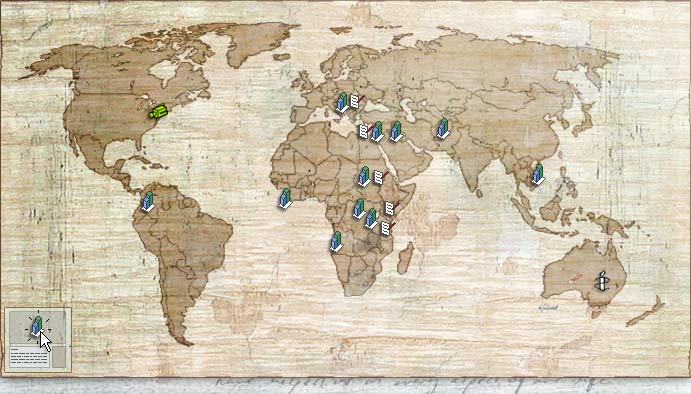
 IntroductionDefinitions IntroductionDefinitionsMap Legend
 Personal Stories Personal Stories Country Overviews Country Overviews The Documentary Project for Refugee Youth The Documentary Project for Refugee Youth Amnesty: Spotlight on Sanctuary Amnesty: Spotlight on Sanctuary |
||||||||||||||
 |
||||||||||||||||
|
||||||||||||||||
 Global Gallery
 Understanding
 Panorama
 Discussion
 Resources


