TIGed

Switch headers Switch to TIGweb.org

Are you an TIG Member?
Click here to switch to TIGweb.org

About TIG

Subscribe to our RSS Feeds

Media Mentions

The following is a list of all media items featuring TakingITGlobal. If you'd like to add a media mention, let us know!

A Design for Changing the World

NCTI: The Youth Voice - March 4, 2009
TakingITGlobal (TIG) is a non-profit social networking website with a difference: its purpose is nothing less than to constitute a platform whereby youth around the world can change their world, and in the process, transform themselves and their futures.

Jennifer Corriero, an infectiously optimistic activist whose sense of social justice is woven into every breath and action, began creating TIG when she was only nineteen. By that time, she already had years of volunteer and community-building experience that forged zeal and vision to a high temper. Jennifer introduces the vision and the capacity that has, likewise, been imbued into TIG:

There are so many different ways in which young people can and are effecting change in the world. We try to encourage that in different ways, whether it be allowing them simply to express themselves; exchange ideas with and learn about people from other parts of world; organize a project; lobby, campaign, or petition; or to develop and share a new innovation. We create and foster an environment that combines learning and action with social networking as a thread that connects it all together. We promote understanding through dialogue.

TIG offers a range of tools to support its ambitious goals, including its Global Gallery for posting images, art, and reflections; blogs, toolkits, research reports, and other publications; tools for making or recording specific commitments and actions; interactive games, videos, and podcasts; information about regional and global events and conferences; activities and a virtual classroom for educators and students; an online issue-based newsletter called the Dispatch; and much more.

Global Demographics

Unlike many social networking sites “that have a US-dominated feeling”, TIG can boast that 20% equal shares of its membership are derived from Asia, Africa, and North America, with the final 40% distributed around the rest of the world in a total of 261 countries.

TIG is offered in 12 languages, and serves nearly one thousand schools. It has over 230,000 members, but has reached over 10 million people since its inception in 2000. Jennifer elaborates,

We broadly define youth as ages 13-30, and the average age of our membership is in the early to mid 20’s, but we do a lot of programs to support middle school and high school students. Teachers love using our site in the classroom. We’re also starting to see our network become more intergenerational, leveraging the expertise of (older) academics, researchers, and people working in business and government - one recent event involved a Mayor in Canada addressing young people. These professionals are also changing their perceptions - because there is often a negative perception of youth - and are joining in on discussions or becoming project mentors. So this is a positive ‘outcome’.

TIG’s impressive success has garnered it recognition from the World Economic Forum and as a Tech Museum of Innovation Honoree.

TIG’s Potential for Youth Living with Disability

Jennifer feels the fundamental function of TIG is the same for all users and members,

The potential — the opportunity — is really to bring perspective and a sense of community that may not have already existed… To create exchanges and experiences that would not otherwise have happened!

Sensitive to the isolation persons with disabilities can still face, she also argues the value of TIG on a concrete and local level, explaining,

The mission of TIG is very global, trying to connect people across cultures and differences. We found in our work in Canada, working with even very local communities, that you can try to create a global community but there really are people sitting within the same region, the same block, and they’re not talking to each other because they have such different life experiences. I think what we create is a sense of exposure and interest — it’s the spirit, the culture, and the sense of community of the environment we cultivate. I think some of that impact can be more local, and we create a greater opportunity for voices to be included in a broader narrative (in the home community).

In keeping with the networking principles of the TIG organization, Jennifer referred us to Irena Kaganski for more insights on the value the site has for persons with disabilities. Irena is a professional writer and a Youth Engagement Coordinator for TIG, as well as an editor for its Panorama online magazine. Irena sees both her own disability and TIG as essential tools for understanding:

To me, the very meaning of living has always been about the ability to reach out to others who may not otherwise have a voice. Having the privilege of “dis”ability has opened many windows of opportunity for me I wouldn’t have experienced. I use it largely as a kind of tool that allows me to see myself as an enabler of my own ability and success, but also to understand the scope of others’ experiences. When I first joined the TakingITGlobal team, I instantly felt that they were an organization which, at its core, represented everything I believe in.

Given her awareness of the challenging and critical nature of the transition from school to adult life for persons with disabilities, Irena recommends and emerging resource site, ‘Beyond Graduation,’ as an important tool:

Networking plays a major role in enabling students with disabilities and their families to begin thinking outside the box to open up the doors of possibility.

TIG and Disability Rights

Jennifer cites a litany of social issues and ‘tags’ in which her members have great interest, with disability rights positioned squarely within the scope:

We have a hopeful view that TIG could pay a bigger role in creating more belonging and, at the same time, impact how technologies are created and inclusion is facilitated. Members are interested in human rights — the rights of those who have been marginalized — including indigent people, children, people living with disabilities, and HIV/AIDS. They are interested in labor rights, and of course climate change is a huge focus especially building up to United Nations climate negotiations. They’re concerned with making sure youth voices are there, and if decisions are made, that people are really considering future generations.

She continues,

We’re part of the global alliance on ITP’s for development, and we’ve played an advocacy role in supporting youth living with disabilities as part of the Youth Caucus for the World Summit on the Information Society, including looking at E-learning as a way to support digital inclusion. Disability is really a pressing topic… how our society is designed in a way to be inclusive, and whether new technologies that are being developed are also inclusive.
Design Principles and Accessibility

Jennifer views inclusion as an underlying component of the mission of TIG. While special attention is paid to accessibility for youth with disability as a design concern, it is embedded within a broader conception of access:

We try to be as accessible as possible in our own development, but that includes people who speak different languages or people with access only to low bandwidth. We are concerned with barriers to participation due to personal or physical abilities, but there is a range of other things. If we’re trying to promote youth participation — if we’re trying to promote a society where citizens are engaged — we need to make sure we’re inclusive.


She explains that design of the site has avoided access difficulties that could occur with text heavily connected with images, and continues,

The site is designed in a way to be screen-reader friendly, and has been tested. It’s designed to be very text-based. That’s part of what we did also for our multilingual platform, so text can be entered in our database and translated. It’s all part of making it more accessible.

Jennifer elaborates that she encounters human capital limitations with accessible design, explaining,

I find that it’s more of the ‘activist voice’ that influences our technical development than the technologists that we’re hiring. I don’t feel people are coming in with an inherent, intuitive knowledge or set of techniques or standards. It’s something we grow and cultivate within our organization. That’s where I think there is a problem, because it shouldn’t just be up to the advocates, it should be part of the educational process of the technologist!

Even so, she is constructively candid about the complexities of balancing design concerns with the desire to be immediately captivating in keeping with the outreach mandate of the organization:

We have debates — you might design something that is really accessible, but doesn’t look very compelling. Some people argue this wouldn’t be very ‘accessible’ for people who would not otherwise naturally be interested in this subject. We do need to make sure that we’re really engaging. If you jump too much to the lowest common denominator of access, for instance even with bandwidth, are we having rich multimedia experiences? Are we relevant to the broad population of people that we serve even though we are a niche site?

Views on Regulation

Jennifer is clear that, “We have never defined ourselves as an assistive technology,” but suggests this may be liberating, affirming that “regulation hasn’t driven our motivation, it’s idealism and mission.” Laughingly, she continues, “Regulation would probably scare us more than help us,” and, returning to the potential of designers and advocates, suggests, “I’d rather have help with the practice (of creating access) than regulation!”

Creating Resources for Educators Brings Funding

Jennifer is keen to point out that TIG has engaged not only in the production of technological platforms, but also educational content and curriculum to support social and global literacy in the classroom in a safe, monitored environment. She shares that doing so has also generated significant funding:

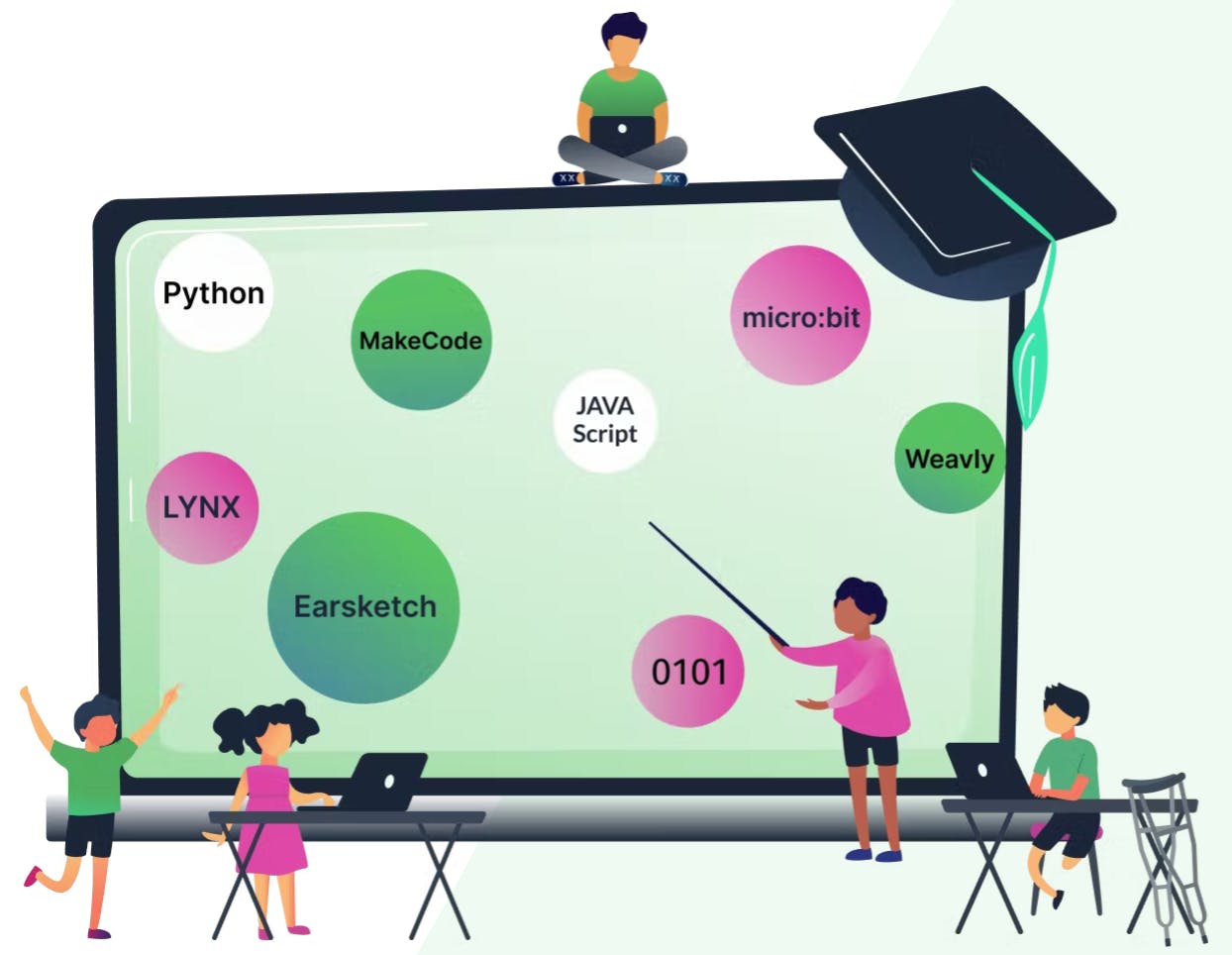
We created TIGed, a special gateway for teachers — our ‘TIG for Educators’ community. Within classroom tools we have an activities database and a virtual classroom — tools specifically designed to help apply our offerings to the classroom. That’s actually helped us generate more resources than our standard peer-to-peer stuff! Most of our grants have been more successful or substantial when they have that classroom-based component while, for instance, our multilingual platform has yet to have any external funding — it’s interesting to see how different initiatives attract or don’t attract resources.

An Enabler and a Collaborator

Jennifer explains that, “Collaboration comes at us like signs along a highway, it’s everywhere, infused into the very infrastructure of design.” She reports that TIG works with some 50 agencies and civil society organizations like the World Youth Congress and Peace Child International, and that it reaches out to political figures, government, and non-governmental organizations (NGO’s). TIG expressly tries to mix communications between a host of partners and members to avoid “segregation of sectors.” At times, TIG serves a role as a broker, bringing parties together who may then push forward with their own activities and events once connections are made. In closing, Jennifer highlights,

Most importantly, young people have been inspired by other youth they interact with through our in-person events with organizations and partners, or through our online tools. TIG simply is an enabler and a collaborator!