Media Mentions
The following is a list of all media items featuring TakingITGlobal. If you'd like to add a media mention, let us know!
Leadership for Student Activities Magazine - Dezembro 31, 2008
Compassionate Clicking
An online tool that connects young people around the world and helps them help others
By Kathleen Wilson Shryock
Young people can change the world. In 1999, this core belief led Jennifer Corriero and Michael Furdyk to try. Active in their own communities, the two Canadian youth were attending conferences, serving as volunteers, and designing Web-based projects. A search for enriching personal experiences combined with knowledge of communications-based technologies fueled their desire to provide young people with the access and the inspiration to generate global change. The seeds for TakingItGlobal.org (TIG) were planted and a worldwide Web-based community began to grow.
Today, TIG has expanded from a resource database and discussion board to an interactive social network supporting more than 200,000 members from more than 200 countries. Headquartered in Toronto, Ontario, the nonprofit organization provides a venue for young people to express themselves, raise awareness, and get involved in local and global issues. Through its resources and discussion boards, the sophisticated Web site helps young people tackle tough topics from human rights to environmental degradation. Tools for creating and managing service projects enable members to work together to address a wide range of concerns. In addition, members can explore the world through detailed country sites or express themselves creatively through a panorama of original poetry and artwork.
Luke Walker, director of education programs, explains, "With TIG, student leaders have an opportunity to connect with like-minded youth all over the world. They can use our tools and resources to make a positive impact in their communities. Through TIG's involvement with events like the International AIDS Conference and the World Youth Congress, students have the opportunity to interact with peers and influence change on a larger scale."
TIG's impressive roster of socially conscious ambitions has resulted in global partnerships with United Nations agencies, corporations, and youth-focused organizations. In 2004, TakingItGlobal developed Creating Local Connections (CLC), a program designed to spotlight and strengthen youth-based initiatives. Through CLC, TIG project teams used their online community to run technology workshops and support local events in host countries. The CLC program was so successful when piloted in Russia that similar projects were installed in Sierra Leone, Liberia, and Nigeria.
The CLC project is just one tool that TIG has implemented to build a worldwide network of responsible citizens. "The most important goal is to inspire young people to take action on issues that affect them and to understand, by learning from their peers, the impact that they can have on the world," Walker says.
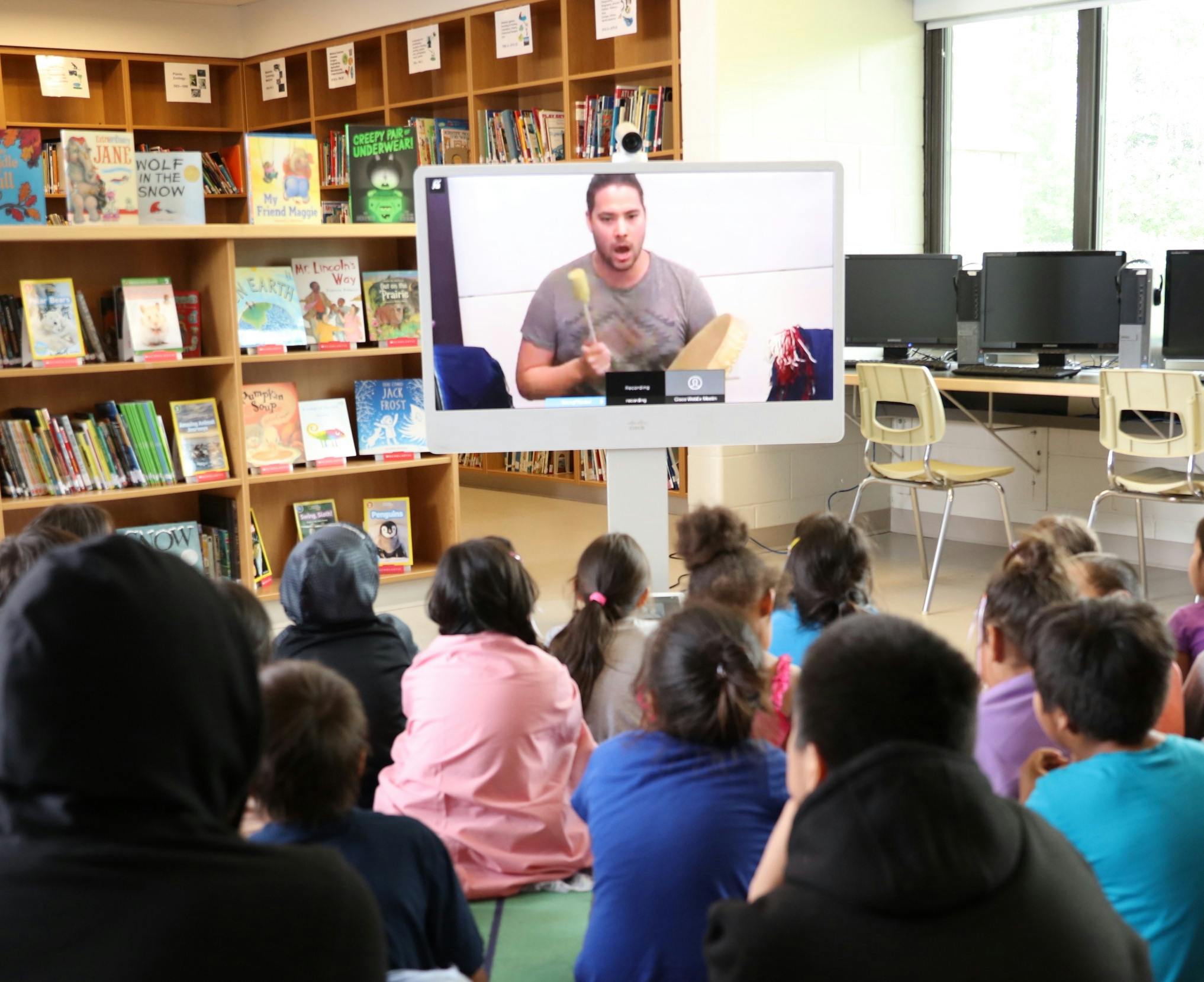
This goal is further supported by TIG's efforts to reach out to teachers through TIGed, a virtual classroom designed to help teachers bring global collaborations into their schools. Walker explains, "Not only can teachers introduce online safe social networking to their students, but they can also connect with other educators who are passionate about global education."
In addition to collaborations, TIGed offers a variety of tools that enable educators to customize their cyber classroom. Features include blogs, podcasting, maps, writing tools, and online file space. Teachers can also brainstorm with other educators through an online discussion group and can supplement lesson plans with ideas from the activities database.
Jennifer Meagher is one educator who used TIGed to motivate students at Alexander Galt Regional High School in Sherbrooke, Quebec. "It's a reality of our times that students communicate, socialize, and access information online. As an educator, I need to bring their lessons into the world that they live in," explains Meagher. "I wanted my students to make a connection with what is real in another part of the world. They would be the ones asking the questions and connecting to the person providing the answers."
Through TIG, Meagher was able to create a cyber classroom with the ability to bookmark relevant sites, post assignments, and offer real-time help during homework sessions. In addition to supporting traditional math and science lessons, TIG technology enabled Meagher to reach out to other communities in Canada and around the world. In one lesson, Meagher's students connected with a classroom in Sydney, Nova Scotia, to discuss tar ponds, a hazardous waste problem that directly affected the Sydney students but was unfamiliar to the students in Quebec. "I wanted my students to learn from people their own age who lived with the problem," says Meagher.
Meagher used TIGed's class chat tool to further expand classroom boundaries by connecting with educators globally. The class chat allowed Meagher and her class to build a relationship with students at Nakulabye Junior School in Kampala, Uganda, and their headmaster, Zimbe Moses. Meagher referenced TIG's "Understanding the Issues" component to develop a global assignment that compared life in Canada to life in Uganda. Students took the lead in formatting their own questions. "The best example of this was a question from one of my students who wanted to know how many loaves of bread $40 would buy for the children in Uganda," says Meagher. "He asked Mr. Moses and learned that bread was not a food staple in Uganda and that they used different currency. So much learning happened that applies to real life, and it was all student-directed."
Meagher believes that learning about the challenges faced by real people promoted increased awareness and a newfound sensitivity toward others. As a result, Meagher's students organized a service project to raise money for the Nakulabye School. During the 30-hour campaign dubbed "Survivor Galt," students collected pledges and listened to virtual guest speakers from around the world address important issues. Students heard about the difficulties faced by many impoverished communities in obtaining clean water. They also learned that in parts of Nepal, 95% of children do not attend school. Monies raised through Survivor Galt went toward the building of a new school in Kampala. Meagher continues to receive updates regarding the progress of the new school and is anxious to share them with her students.
For Meagher's group, connecting with other communities through cyberspace reaped educational rewards. In a survey completed by students at the end of the project, 100% of participants believed that they learned more by "talking" with real people in an online discussion than if they had completed the assignment solely though books or Internet research. Students also thought that they would remember more about what they had learned.
Walker has also witnessed the benefits of technology in action. In one example, Walker explains the impact that the TIG Web site had on one of the organization's Iraqi members. The young man was able to connect with peers from around the world. As a result, he became involved with a TIG "Student Voices" project and is now working with a local school to provide students with communication technology capabilities.
"It's inspiring when I see what TIG members have done." "It's reassuring to see such a large number of young people who care about the world. There are youth who haven't been taking action because they don't know how."
The effects of TIG are being felt in the United States as well. In Pennsylvania, the Department of Education has used TIG technology to spur a high school reform initiative. In "Classrooms for the Future," school leaders use a TIGed virtual classroom as a training tool for educators. The classrooms are used for professional development and also as a method of engaging students in online discussions. It is hoped that the technology-enriched environment will result in innovative teaching methods, heightened student interest, and improved leadership skills.
Educators Julie Lindsay and Vicki Davis used technology to connect high school students at International School Dhaka in Bangladesh with 11th graders at Westwood Schools in Camilla, GA. In "The Flat Classroom," students used collaborative tools such as blogs and podcasts to discuss real-world scenarios. The final project was a multimedia presentation including content from both parts of the world.
Students at Carmichael Middle School in Richland, WA, work with TIG technology to access and complete assignments. When they learned that a local creek was slated to become a parking lot, students took TIG's action-oriented message to heart and got involved. They researched potential issues and action plans and presented their findings to city officials. As a result, parking lot construction was scrapped and officials are now working with students to improve the area.
Although the benefits offered by technology are great, educators must be aware of accompanying risks. Meagher notes that it is important to be informed, especially in regard to the online safety of students. TIG's virtual classrooms are equipped with cyber safeguards. In setting up the classroom, the teacher has total authority in granting access to class members. The teacher also serves as a moderator and can provide additional guidance if necessary. In addition, Meagher stresses the importance of educating students and their parents about proper online etiquette. She is outspoken about Internet safety and believes that providing opportunities to practice safe online behavior helps students to develop good habits. "We need to be aware of what students are doing. Be open with them and show examples of proper online communication," Meagher says. "We must also involve the parents in the process."
Meagher acknowledges that successfully navigating through cyberspace can be challenging, but she encourages educators to stay the course. "Years ago, when students first started learning how to use a computer, it was about the basics. Today's kids already know the basics," she says. "Advanced technology can provide educational experiences that stay with students throughout a lifetime. The benefits far outweigh the frustrations." Meagher encourages educators to embrace the educational advantages offered through modern technology by upgrading their own skills. She suggests working with another educator who can serve as a mentor or participating in individual training sessions that offer one-on-one instruction.
There is no question that today's youth are confronted by an array of challenging global issues. Poverty, war and conflict, health concerns, and environmental degradation are just a few of the concerns facing tomorrow's leaders. Teachers and their students are finding that technology can provide invaluable educational opportunities, resources, and a sounding board for sharing ideas. When young people have connections that allow them to be heard around the world, the potential for positive change has no boundaries.